- Filimoni House, Off African Unity Avenue, City Centre, Lilongwe
- Open Hours : Mon-Fri 07:30 - 16:30



Civic Education
Civic education can be broadly defined as the provision of information and learning experiences to equip and empower citizens to effectively participate in democratic processes. The main goal of civic education can be considered as the formation of civil qualities on the basis of new knowledge, skills and values that help individuals to solve emerging problems, adapt to changing socioeconomic and political conditions, represent and protect their rights and interests and respecting the rights of others.
The Civic Education and Public Relations Section is responsible for ensuring that the Commission fulfils its public awareness mandate. This is achieved through the implementation of activities aimed at raising awareness of the Laws of Malawi and the Constitution to the public, government departments and other bodies. In collaboration with other institutions, the Commission raises awareness on the Laws of Malawi, the work and achievements of the Commission; and maintains strong relations with members of the media in order to improve visibility and accessibility of the Commission.
Some of the laws the civic section has carried out public awareness initiatives in recent years are child and gender-related laws, and HIV and Aids (prevention and management) Act. To effectively carry out the public awareness on the laws, the Civic Education section carries out the following main Interventions:
Materials
The Commission produces IEC materials on the laws of Malawi that are disseminated to various Stakeholders. The section simplifies the laws so that the public can easily understand various pieces of legislation.
In addition, the materials are also produced bearing in mind the different target stakeholders that will use them such as traditional leaders, child protection workers and other duty bearers, and students. To effectively reach out to members of the public across the country, the materials are also translated into languages such as Chichewa, Tumbuka, Yao and others.
The information on the laws is produced in the form of brochures, factsheets, manuals, booklets, and comic books. Braille materials are also produced targeting audiences with visual impairment.
The Commission conducts legal literacy sessions aimed at equipping stakeholders with knowledge on the laws of Malawi and the law reform process. The sessions aim to empower stakeholders to seek redress when rights have been violated, and hold duty bearers accountable. The Commission targets stakeholders at school, community, district and national level. It also conducts legal literacy sessions in institutions and organizations on the laws.
The Commission conducts school-based legal literacy session in schools with students and stakeholders such as learner’s council, teachers, head-teachers, Primary Education Advisors (PEAs), mother groups, School Management Committee (SMC), and SHN (Sanitation, Hygiene and Nutrition) coordinators, equipping them with knowledge on the laws of Malawi.
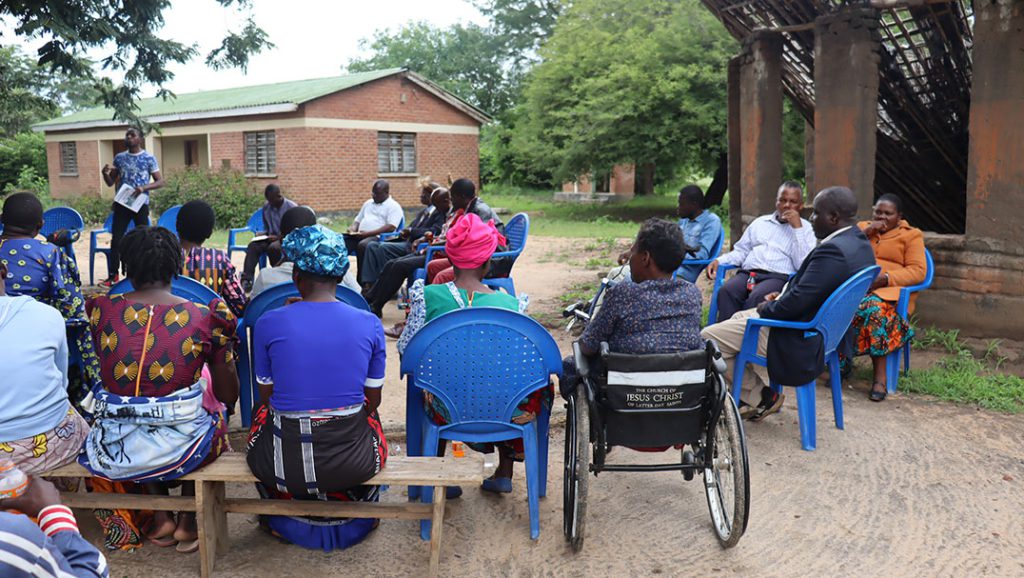
The Commission conducts community-based legal literacy sessions, equipping community members and stakeholders such as traditional leaders, members of ADC (Area Development Committee) and VDC (Village Development Committee), religious leaders, and Child Protection Workers (CPW).
To ensure that no member of the public is left behind, the Commission conducts mass media campaigns in community radios and television stations. Conducting programs on the laws in community radios ensures that information on the laws is able to reach to the members of the public residing in hard-to-reach areas. In the on-going child and gender-related laws awareness campaign, the Commission has conducted radio programs in community radios such as Radio Dinosaur in Karonga, Mudzi Wathu radio in Mchinji, and Mzati FM in Mulanje. Through the radio programs, the Commission has managed to reach to over 15 million people on the laws.